PART 1
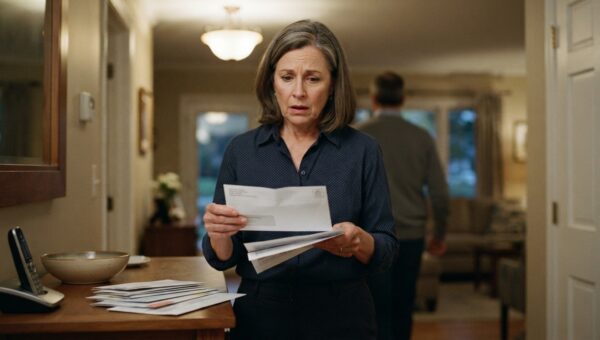
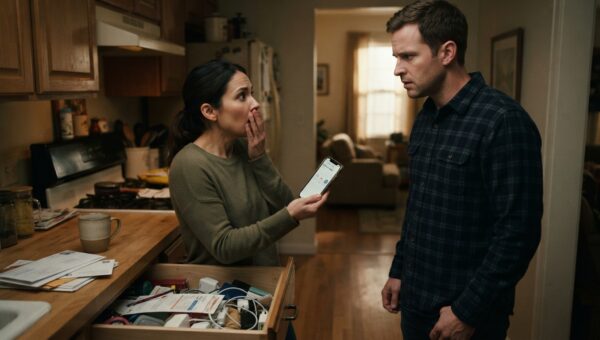
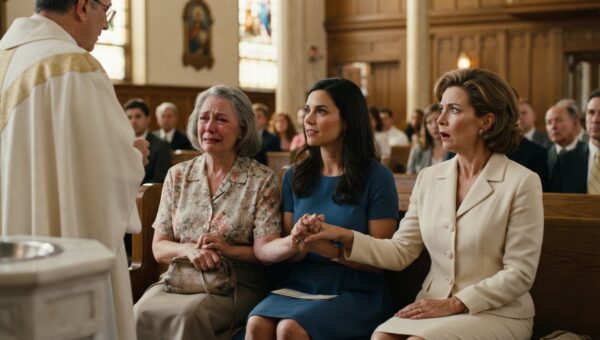
My husband, Greg, and I had different ideas about where our daughter, Chloe, should spend the holidays after her divorce.
Greg wanted to keep the old family schedule. He insisted that Thanksgiving had to be at our house in Fort Wayne, with the turkey carved at one o’clock, followed by Christmas Eve breakfast at his brother’s place, and Christmas dinner back around our dining room table.
He told me that when a thirty-year-old child goes through a rough patch, structure is the only thing that keeps her from drifting.
I wanted her to feel free to make a new one. Chloe had spent four years in an exhausting marriage to a man who monitored her phone bill and criticized the way she folded dish towels. The divorce had been finalized in September, leaving her thin, quiet, and living in a bare one-bedroom rental downtown. Every time Greg brought up the holiday calendar, Chloe looked at her lap and nodded just enough to make him stop talking.
“She needs routine, Martha,” Greg said over his morning toast two weeks ago. “If you tell her she can do whatever she wants, she will sit in that apartment with the blinds drawn.”
“She needs room to breathe, Greg,” I told him. “She doesn’t need to perform happiness for twelve relatives just because the calendar says November.”
Chloe listened to both of us on speakerphone last Thursday. She let Greg finish his speech about family traditions, and she let me finish my speech about taking a quiet week to rest.
“I’ll decide,” Chloe said. Her voice was flat, without the sharp edge she used to have. “Meet me at the airport on Sunday afternoon at four. Terminal B, near the baggage claim coffee counter. I want to tell you both together.”
Greg smiled across the kitchen table. He assumed she had picked our house. He spent Saturday cleaning the gutters and hauling the extra leaf for our dining table up from the basement.
We drove out to the airport through a cold, spitting rain. We parked in the short-term garage, took the moving walkway down to Terminal B, and stood by the metal railing near the escalator.
At four-fifteen, Chloe walked down the carpeted ramp.
She had no luggage. No rolling suitcase, no duffel bag, not even a garment sleeve. She wore her black wool winter coat and carried a canvas tote bag on one shoulder. In both hands, clutched flat against her stomach, she held a heavy wooden eight-by-ten frame.
It was a photograph from her childhood.
In the picture, Chloe was nine years old, standing on the rocky shore of Lake Michigan during our family trip in July of 2005. She was wearing an oversized yellow sweatshirt, squinting into the bright sun, holding an ice cream cone in one hand. Greg stood behind her with his hands on her shoulders, smiling wide under his ball cap. I was sitting on a driftwood log to the side, looking at the water.
Greg stepped forward to hug her, but Chloe took half a step backward, keeping the glass frame between them like a small barrier.
“I’m not coming for Thanksgiving, Dad,” Chloe said quietly. “And I’m not coming for Christmas.”
Greg’s hands dropped. “What are you talking about? Did your ex-husband try to contact you?”
“I took a three-year contract with an educational foundation in Singapore,” Chloe said. “My flight departs at seven-forty tonight.
My bags are already checked through the international terminal on the other concourse. I came down here to say goodbye before anyone could talk me out of it.”
Greg went completely quiet. The blood drained from his forehead, leaving his skin gray under the bright concourse lights. In thirty-two years of marriage, I had seen my husband argue with mechanics, city inspectors, and church deacons, but I had never seen his mouth open without a sound coming out.
I stood there looking at her pale face. I had not heard her laugh in months, and the loud airport announcements overhead drowned out the questions I wanted to ask about visas, rent, and who was going to check on her when she got sick ten thousand miles away.
“Chloe,” I managed to say, reaching out to touch the wet sleeve of her coat. “Why did you bring that photograph?”
Chloe looked down at the glass. Then she turned the wooden frame around.
The cardboard backing had yellowed tape along the edges. Across the top, written in faded blue ballpoint ink, was a date: *July 18, 2005.*
Chloe looked from me to her father.
“Which one of you remembers that day correctly?” she asked.
PART 2
A family with three small children bumped past us, dragging plastic carry-on bags toward the revolving exit doors. The automated voice on the loudspeaker repeated a warning about unattended baggage, the chime cutting through the draft coming off the curb.
Greg didn’t look at the date on the cardboard. He looked at the floor tiles between Chloe’s boots.
“Chloe, that was twenty-one years ago,” Greg said, his voice dropping into that tight, careful register he used whenever a conversation threatened to leave the tracks he built for it. “You were nine years old. We went to the dunes. We had cherry ice cream in Grand Haven. It was a good vacation.”
“It wasn’t a good vacation, Dad,” Chloe said.
She reached into her canvas tote bag, pulled out a folded piece of lined stationery, and slid it out from behind the picture backing.
It was a page torn from a child’s blue spiral notebook, dated that exact same evening: July 18, 2005.
The handwriting was round and cramped, the pencil marks pressed deep into the paper:
“Daddy told Mama at the picnic table that if she didn’t stop crying about the bank papers, he would pack his car and leave us at the park. Mama went to sit on the log by herself. Daddy took me to get ice cream and told me to smile big for the camera so Mama would feel bad for ruining our trip. He told me that good girls don’t make their fathers look mean.”
The paper felt like an iron weight between us.
I looked at the photograph again. For over twenty years, that picture had sat on the bookshelf in our den, right between Greg’s bowling trophies and our college diplomas. Every time company came over, Greg would point to that frame and say, “That was the summer Chloe caught her first perch. Best week we ever had.”
I had forgotten the fight at the picnic table. Or rather, I had buried it under two decades of grocery lists, mortgage payments, and high school band competitions.
In July of 2005, Greg had taken eleven thousand dollars from our emergency savings account to invest in a friend’s auto parts franchise that collapsed four months later. When I found the withdrawal slip in his glove compartment on the first night of our cabin rental, he had slammed his fist on the wood picnic bench and told me that my lack of faith in his judgment was what made our marriage feel like a prison. I had walked down to the wet driftwood by the surf, wrapped my cardigan around my shoulders, and sat there until the sun went down, listening to the lake water while my husband bought our daughter an ice cream cone to use as a prop against me.
“Chloe,” Greg whispered, reaching out with one trembling hand. “I was under enormous financial pressure that summer. You were a little girl. You didn’t understand the adult world.”
“I understood that you made me an accomplice, Dad,” Chloe said. Her voice didn’t rise. She spoke with a terrible, steady clarity that was worse than screaming. “You handed me that cone, you put your hands on my shoulders, and you told me to smile until my cheeks hurt so we could show your mother and my teachers what a happy family looked like.”
Chloe turned her head, looking directly at me.
“And you, Mom,” she said. “You sat on that log. You stayed on that log for twenty-one years. Every time Dad decided what we were eating, where we were going, how much money we could spend, or what church we had to sit in, you just looked at the water. When Mark started doing the exact same thing to me in my marriage, checking my mileage and telling me I was crazy whenever I asked about our accounts, you told me to be patient. You told me marriage takes compromise.”
The concourse seemed to shrink until there was no air left in it.
“I didn’t want you to be alone, Chloe,” I said, my throat burning. “I thought I was teaching you how to endure.”
“You taught me how to disappear, Mom,” Chloe said. “And I spent four years disappearing for Mark until I woke up in an empty living room in August and couldn’t remember what kind of tea I liked.”
PART 3
Greg took a heavy step toward her, his face dark with desperate pride.
“You can’t just fly to Asia, Chloe!” he said, the anger finally breaking through his fear. “You don’t know anyone in Singapore. You have no family there. You’re running away from the people who love you because of an argument from twenty years ago! It’s irresponsible!”
“I am thirty years old, Dad,” she said, looking him dead in the eye. “I have a master’s degree in curriculum design that I paid for myself while Mark told me it was a waste of time. The foundation is providing my apartment, my health coverage, and an office three blocks from the harbor. I am not running away from an argument. I am leaving a family where everything has to be a stage play so you don’t have to look at what you broke.”
Chloe reached out and handed the wooden frame to her father.
Greg held it with both hands, the glass facing his chest.
“I don’t want this in my apartment anymore,” Chloe told him. “You keep it. Put it back on your shelf next to the bowling trophies. You can tell everyone at Thanksgiving dinner about the lake.”
She pulled her boarding pass from her coat pocket.
It was printed on white paper, showing a flight from Indianapolis to Chicago, then the long leg across the Pacific. The departure gate was in Concourse A, down the long corridor behind the security checkpoint.
She turned to walk away.
“Chloe, wait,” I called out.
My voice broke the cold freeze in my chest.
I didn’t look at Greg. I didn’t care that people in business suits were staring at us from the coffee counter. I stepped past my husband, caught up to Chloe before she reached the escalator, and grabbed both of her hands.
Her fingers were icy.
“You’re right,” I told her, the tears running hot down my cheeks. “I sat on the log. I sat there because I was afraid of having nothing, and I made you pay for my fear.”
Chloe stopped. Her dark eyes, the eyes that looked so much like mine when I was young, filled with sudden moisture.
“Mom,” she whispered.
“Don’t come to Thanksgiving, baby,” I said, squeezing her knuckles until my rings pressed into my skin. “Don’t come for Christmas. Don’t call us on Sunday afternoons just because the clock says two o’clock. You go to that harbor. You drink whatever tea you want. And you don’t smile for a single person unless something makes you genuinely glad.”
Chloe looked at my face for five long seconds. The rigid, defensive posture in her shoulders gave way all at once.
She dropped her canvas tote on the carpet, stepped into my arms, and buried her face into the collar of my coat.
She smelled of clean soap, wool, and the travel lotion she had put on her wrists. I held her with both arms locked around her back, feeling her heart beating fast against my ribs, the way I had held her when she was six years old and had fallen off her bicycle on the gravel drive.
She didn’t hug Greg. She pulled back from me, wiped her cheek with the back of her thumb, picked up her canvas bag, and walked through the glass security doors.
She didn’t look back when she took off her shoes at the metal detector.
Greg stood ten feet behind me, still holding the eight-by-ten wooden frame against his stomach with both hands. His knuckles were gray.
“Martha,” he said, his voice small, raspy, and stripped of every bit of authority. “What did you just do?”
“I let our daughter go, Greg,” I told him, turning my back on the security lane. “And now we’re going home.”
ENDING
The drive back to Fort Wayne was two hours of unbroken silence.
The rain turned to wet, slushy snow along Route 30, the wiper blades clearing gray streaks across the glass. Greg kept both hands at ten and two on the steering wheel, his eyes fixed on the taillights of the semi-trucks ahead of us. The framed photograph lay flat on the back seat, face down on the wool blanket.
When we got to our house on Maple Road, it was nearly eight o’clock.
The house was cold. Greg walked into the den, set the photograph on the corner of his desk, and went down the hall to bed without turning on the television or taking off his flannel shirt.
I didn’t follow him.
I walked into the dining room, where the extra wooden leaf still sat propped against the baseboard, waiting for a holiday that was never going to happen.
I grabbed the heavy oak slab with both hands, carried it down the basement stairs, and slid it into the storage slot behind the furnace.
Then I came back up to the kitchen, made a pot of chamomile tea, and sat at the table alone.
On Monday morning, while Greg was at the hardware store picking up salt for the driveway, I called my sister, Claire, in Michigan.
“Claire,” I said, looking out the kitchen window at the bare apple trees in the side yard. “I won’t be hosting Thanksgiving this year. And Greg and I won’t be coming to the family breakfast on Christmas Eve.”
Claire paused. “Martha, what happened? Greg has been talking about the turkey schedule since September.”
“Greg can go if he wants to,” I said. “I am staying home.”
Chloe texted me three days later, at four in the morning our time.
It was a photograph sent from her phone. Not an old childhood picture, and not a family portrait.
It showed a small wooden table by an open window on the fourth floor of an apartment building. Through the glass, you could see palm trees and the gray water of the shipping channel under a bright, unfamiliar morning sun. On the table sat a white ceramic mug of green tea and a small notebook with a green pen resting on the cover.
Underneath the picture, she wrote one sentence: “The tea is jasmine, and the air smells like the ocean.”
I didn’t show the text to Greg.
I saved the image to my phone, set the screen down on my nightstand, and walked out onto our back porch with my wool sweater pulled tight against the November frost.
My marriage is not over, but the stage has been cleared. Greg sits across from me at breakfast now without his lists, without his schedules, looking at me like a man who just realized that the house he thought he was ruling was built out of dry paper.
He hasn’t moved the photograph back to the den shelf. It sits in the bottom drawer of his nightstand, buried under his old road atlases and spare change.
I don’t know if Chloe will come home next year, or the year after that.
She may stay across the ocean until her hair starts to turn gray, and she has every right to that distance. A child does not owe her parents her life just because they paid for the roof over her head.
I leaned against the porch railing, took a deep breath of the freezing Indiana air, and watched the morning light cut through the bare branches.
For the first time in twenty-one years, I wasn’t waiting on the log for someone to tell me when I was allowed to stand up.