The morning air had that damp, heavy chill that usually means the river is rising again. I stood by the kitchen window watching the gray drizzle slick the asphalt of our driveway while Leo checked his reflection in the hallway mirror. He had the gray Honda idling out front, the heater humming through the vents to clear the frost off the windshield.
He smoothed down the lapels of his thrift-store jacket for the third time in two minutes. That jacket had cost twelve dollars at a charity bazaar over in Cairo, and it was a little broad in the shoulders, but he wore it like armor.
Leo was twenty-four, and this was his very first real interview for an engineering assistant position at the regional utility office downtown. He had spent four years chipping away at his night classes while working the loading dock at the feed store, keeping his head down and his tuition paid in nickels and dimes. I knew how much this morning mattered to him. I handed him the keys to the Honda right before he headed out the door, telling him to watch out for the slick spot near the old iron bridge where the drainage always failed.
“Thanks, Arthur,” he said, giving me a quick, tight-lipped nod that didn’t quite reach his eyes. “I’ll be back around noon. Wish me luck.”
“You’ve got this, Leo,” I told him, trying to sound more confident than I actually felt. “Just be yourself and let them see what you can do.”
I watched him back the Honda out past the cedar hedge, his hands gripping the steering wheel at ten and two with the kind of absolute concentration that only a brand-new driver has. Then the car disappeared around the corner, leaving the gravel driveway quiet except for the steady drip of water off the garage eaves. I went back inside, poured myself another cup of chicory coffee, and tried to keep busy by wiping down the counters. But the rain kept drumming against the kitchen window, and I found myself pacing from the stove to the front door every few minutes.
Two hours. That was all it took for the whole morning to unravel.
I heard the Honda gravel crunching in the drive way before I saw it.
I looked up from the kitchen table where I had been pretending to read the morning paper, and saw Leo stepping out into the drizzle. He didn’t run for the porch. He just walked slow through the wet grass, holding the car keys in one hand and that thrift-store tie in the other. He had already pulled the knot loose, letting the faded blue silk hang limp down his chest like a dead thing.
When he pushed open the back door, the smell of damp wool and cold air rolled into the kitchen. He didn’t say a word. He just walked over to the laminate counter and dropped the keys into the little pottery bowl with a sharp clatter.
“How did it go?” I asked, setting my coffee mug down. “Did the traffic give you trouble?”
Leo pulled out a chair and sat down hard, staring straight ahead at the flour canister on the counter.
His jaw was locked so tight I could see the muscle jumping in his cheek. He looked exhausted, and it wasn’t the kind of tired that comes from a hard shift on the loading dock. It was the look of a man who had just walked into a trap he didn’t know was set.
“The interview went fine,” he said, his voice flat and low. “In fact, it went great. The technical questions were easy. I knew every formula they put on the whiteboard.”
“Well, that’s wonderful,” I said, leaning forward. “So what happened? Did they offer you the spot on the spot?”
He finally looked at me, and his eyes were dark with a mixture of anger and something that looked a lot like shame. He lifted the tie slightly, turning the frayed silk over in his fingers before setting it down beside the keys.
“He said the interview had gone well, but he wasn’t going to take the job. I asked why. He told me the hiring manager had recognized his last name; asked whether his father still kept the old photograph in his office…”
The kitchen seemed to get smaller all at once. The hum of the refrigerator sounded louder, like a dull engine grinding in my ear. I knew that last name as well as my own, even though Leo had taken his mother’s maiden name when he was just a boy, dropping the heavy weight of a man who had never earned it. But small towns have long memories, especially in the regional trades where everybody went to the same vocational schools and worked the same drafting tables thirty years ago.
“Who was the manager, Leo?” I asked, though I think I already knew the answer in my bones.
“Mr. Halloway,” he said, his voice dropping an octave. “Grey-haired man with glasses thick as bottle bottoms. He sat behind a big oak desk that looked like it belonged in a courtroom. He didn’t ask me about my night classes. He didn’t ask about my GPA or the engines I’ve rebuilt in the garage. He just stared at my application, looked up at my face, and smiled that thin, knowing smile people give you when they think they’ve got your number.”
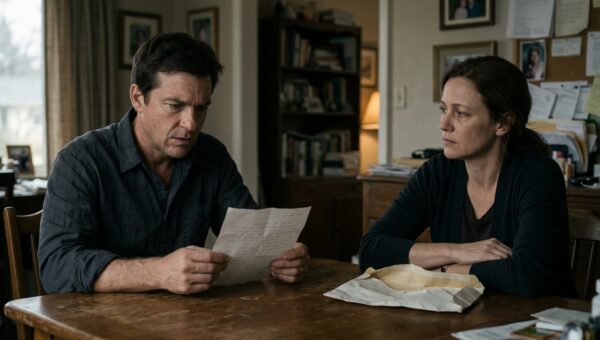
I pulled out the chair across from him and sat down, resting my elbows on the scarred wood of the table. “What did he say to you?”
Leo swallowed hard, his fingers tracing the edge of the car keys in the bowl. “He told me my eyes looked just like his old partner’s. He said, ‘You’ve got Raymond’s brow, son.’ And then he asked me if my father still had that framed patent drawing hanging above his desk downtown, the one with the signatures from the ninety-eight turbine merger.”
The memory of Raymond, Leo’s biological father, came rushing back with all the warmth of a February slush storm. Raymond hadn’t just left a family behind when he skipped town for the oil fields out in West Texas; he had left a trail of burned bridges, unpaid debts, and broken partnerships that took half the county to clean up. He was the kind of charming, brilliant engineer who could talk his way into any board room, take credit for everyone else’s sleepless nights, and walk away whistling while the rest of us picked up the pieces of the projects he abandoned.
“I told him I hadn’t seen my father since I was eight years old,” Leo continued, his voice shaking slightly now. “I told him I didn’t know anything about his office or his photographs. And you know what Halloway did? He laughed. He leaned back in his leather chair and said, ‘Well, the apple doesn’t fall far from the tree, does it? We’ll teach you the ropes here just like we taught him.’ That was when I stood up.”
“You walked out?” I asked.
“I stood right there and handed him back his onboarding packet,” Leo said, looking right into my eyes. “I told him I wasn’t interested. He looked confused, like I was turning down a winning lottery ticket. He couldn’t wrap his head around the fact that I didn’t want his charity, and I sure as hell didn’t want to step into my father’s old shoes. I’m not going to work in a place where every time I fix a valve or draw a blueprint, old men are going to squint at me and wonder if I’m going to steal the credit or walk out on a contract.”
He slumped back in his chair, staring down at his calloused hands. The silence in the kitchen stretched out for a long time, broken only by the steady rhythm of the rain outside. I wanted to tell him that he should have swallowed his pride for the sake of a steady paycheck and health insurance. I wanted to tell him that bills don’t care about family history and that a good job in this county is hard to come by. But looking at him sitting there in his thrift-store jacket, holding that cheap tie, I knew the words would taste like ash in my mouth.
“You did the right thing,” I said quietly.
Leo looked up, surprised, as if he expected me to give him the usual lecture about being practical. “It pays twenty-eight dollars an hour, Arthur. That’s more than I’ve ever made in my life. We could have used that money for the roof repair.”
“We’ll manage the roof,” I said, reaching across the table to tap the edge of the ceramic bowl. “Your father left a lot of things behind in this town, but he doesn’t get to buy your future, too. If you took that job, every time Halloway walked past your desk, you’d be paying interest on a debt you never borrowed.”
Leo let out a long, ragged breath, and some of the tension finally drained out of his shoulders. He reached over, picked up the tie, and began folding it carefully into a neat little square, the way his mother used to fold his church clothes when he was a kid. He didn’t say anything for a long time, just smoothed the fabric down with his thumb until the edges lined up exact.
“I don’t even know where to look next,” he admitted, his voice dropping to a near whisper. “Everywhere I go in this county, somebody remembers him. Either they’re still mad at him for money he borrowed, or they’re talking about some clever design he slapped his name on back in the nineties.”
“Then we look somewhere else,” I told him, standing up to refill my coffee mug. “There’s more than one town in this state. And there are plenty of people who don’t know Raymond from a bale of hay. You’ve got skills with your hands, Leo. You know how to troubleshoot machinery better than half the senior techs in this county. You just need a place where your name doesn’t precede you through the door.”
He nodded slowly, looking down at the folded tie resting beside the car keys. The anger had faded, leaving behind that quiet, stubborn determination I had come to respect more than anything else in him. He wasn’t running away from a challenge; he was drawing a line in the dirt and refusing to cross onto ground that wasn’t his.
We spent the rest of the afternoon sitting at the kitchen table with a stack of local trade papers and a yellow legal pad, marking up job listings for independent contractors, small-scale fabrication shops, and repair yards two counties over where nobody had ever heard of Raymond and nobody cared about old office photographs. It wasn’t glamorous work, and it didn’t come with a corner office or a fancy title, but it was honest.
By evening, the rain had stopped, leaving the driveway gleaming under the amber glow of the security light. Leo picked up his keys and the neatly folded tie, carrying them down the hall toward his room. The thrift-store tie wasn’t a symbol of a missed opportunity anymore. It was just the uniform of a young man who had looked his own ghost in the eye and decided to walk right past it.