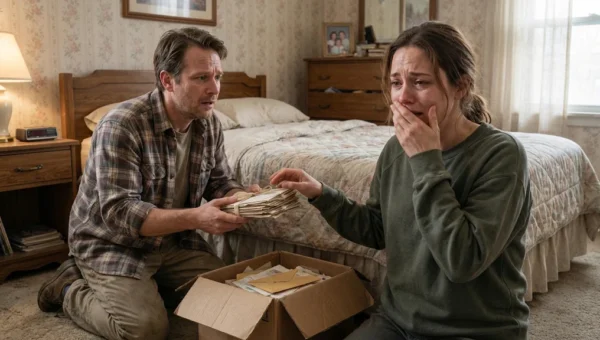
The hospital had a little card taped to the foot of my bed with my name spelled right. I noticed because almost nothing else in my room seemed to be meant for me.
That afternoon, my sister Chloe and I had delivered at the same hospital. Her son was healthy and full-term. My daughter, Maya, was eight weeks early and in intensive care.
I had also lost enough blood during my emergency cesarean that the nurse kept checking the line in my arm and telling me not to try to stand.
By nightfall, our family had arranged portraits and visiting times for Chloe’s baby. My room stayed empty.
My phone kept lighting up with pictures from downstairs. My mother, Eleanor, beside Chloe’s bassinet. My father, Arthur, holding the baby. Messages about who should visit next, and where they could get better light for another picture.
I called Dad because I was scared and because I still believed, somehow, that if I asked plainly enough, he’d remember I was his daughter too.
“Could you come upstairs for a few minutes?” I said. “I can’t get out of bed. Maya’s still in the NICU. I just need a familiar face.”
He let out a breath like I’d interrupted him. Then he told me Chloe had a newborn and the whole family was there.
I was making everything about myself. The doctors knew what they were doing. I couldn’t expect people to put their lives on hold because Maya was having a rough start.
I heard my mother laughing behind him. Someone asked her to move closer to the window.
Then Dad said, “We’re celebrating a healthy baby. Your daughter may not make it, and there’s nothing I can do about that. Stop dragging us into your problems.”
I waited for him to take it back.
He didn’t.
I ended the call without answering. The phone felt slippery in my hand. I turned it facedown and stared at the little card with my name on it.
It was the only thing in the room that had been placed there for me.
I’d been the person my family called when a payment was due for a long time. I’m an architect. I built my own firm slowly, project by project, and my family learned that I could make a problem go away if I put my name on the right form.
Dad’s commercial lease was in trouble, so I guaranteed it. Chloe was behind on rent, so I helped with her apartment. There were vehicle payments and credit cards and household bills. I told myself each thing was temporary. I sent the money because the call always came when somebody sounded worried, and I hated being the person who said no.
The total was more than $14,000 a month by then. I didn’t know the exact number until later. I only knew I was tired of opening my banking app and seeing another transfer.
That night, the door opened and David came in. My husband had driven to the hospital as soon as he heard I’d gone into surgery. He looked like he’d been moving fast. There was a scrape across his knuckles and a thin line of blood on one finger.
He saw my phone. Then he looked at me.
“What did he say?”
I tried to tell him. I couldn’t get the words out in order, so I just shook my head. David took my hand carefully, avoiding the IV, and sat down.
“I’m here,” he said.
His voice stayed low. His hand didn’t.
After a minute he told me what had happened downstairs. He’d stopped by the maternity suite on his way up because he’d heard my family was there. Dad was talking about private catering, a suite upgrade, and gift baskets. He was telling people I’d foot the bill.
David had heard him say it. When he confronted Dad in the corridor, Dad acted like it was no big deal. A card was on file. It was just easier that way.
“Not anymore,” David said.
Dad pushed past him. David shoved him back. His hand scraped against the brick wall before he walked away and came to my room.
“I shouldn’t have put my hands on him,” David said. “I’m sorry.”
I looked at his scraped knuckles. I was too tired to be mad at him. I was also too tired to comfort him about it.
“I’m glad you came upstairs,” I said.
That was all I could manage.
In the morning, Nurse Elena told me I could visit Maya if the doctor cleared me and the staff helped me into a wheelchair. I asked three times if I was really allowed to go. She said yes, but I still looked at David before I believed her.
He wheeled me down the hall. My body hurt in a way I had never felt before. Every bump in the floor seemed personal.
Maya was so small. A nurse helped me reach through the opening in the incubator. I touched one of her fingers with the tip of mine. Her hand closed around it, or maybe her fingers just moved. I don’t know. I’ve replayed that part enough times that I don’t trust every detail.
But I know what I said.
“I’m right here, Maya.”
Her monitor kept beeping. Elena stood beside me while I cried without making a sound. David rested one hand on my shoulder.
I had spent years making sure my family could keep the life they wanted. In that room, I understood how much of my life had gone into keeping their problems from reaching them.
I wasn’t going to give them what belonged to her.
That afternoon I asked David to call Marcus Vance, my business attorney. Marcus had handled my firm’s contracts for years. I’d never called him from a hospital bed before, but he picked up on the second ring.
“I need you to get my name off everything,” I said.
He asked me to be specific. I was.
The commercial lease guarantee for Dad. Chloe’s apartment lease. Every authorized-user credit card. Every account where my firm or my personal credit was being used to cover their spending.
“Do you want to sleep on it?” he asked.
I looked toward the NICU doors. “No.”
Marcus said he’d start that day. He warned me that some releases would take time, and that canceling the cards would cause a scene. I said I understood. I didn’t tell him I’d already heard the scene in my head.
There was no dramatic moment after that. Just forms, calls, and me signing my name while I was still sore from surgery. Marcus sent me a list of the guarantees and accounts. I read it twice. Over $14,000 a month, between leases, vehicle notes, and credit lines.
I had been paying for their lives in pieces small enough that I could pretend it wasn’t the whole thing.
The hospital charge was the first place the change showed up. Dad’s card was declined when he tried to pay for Chloe’s private suite and celebration package. The suite was downgraded. The family had to pay the balance themselves.
I heard about it from Chloe, not Dad. Her text said, “There’s some kind of problem with the card you gave us.”
I didn’t answer.
A few minutes later she called. I let it go to voicemail. Then Dad called, and then he called again. I didn’t pick up. I was in my bed looking at the NICU monitor through the glass, listening to Maya’s steady beeps, and I could feel the old habit trying to take over. Call back. Fix it. Keep everybody calm.
I let the habit pass.
By the next day, Dad had made it to my floor. He came fast, talking before the elevator doors had fully opened. David got up from the chair beside my bed and stepped into the hall.
“Clara needs to fix the glitch,” Dad said.
“There isn’t a glitch,” David replied.
Dad tried to move past him. Hospital security stopped him before he got to my door. I could hear them from inside the room. My hands were shaking, so I put them under the blanket.
David handed him Marcus’s business card.
“Talk to her lawyer,” he said.
Dad didn’t come in.
My mother left a voicemail saying I was hurting the family at the worst possible time. Chloe texted that I’d always helped before, so she didn’t understand why I was doing this now. The messages changed as the days passed. First confusion, then guilt, then anger.
Not one asked how Maya was doing.
That hurt more than I expected. I’m not proud of that. I still wanted them to ask. I still wanted my mother to say she was sorry she hadn’t come upstairs. Wanting it didn’t mean I was going to put my name back on their bills.
Maya had a hard first stretch. Then she started gaining weight. The doctors kept adjusting things, and I learned to ask better questions. I learned which nurse was working and what Maya had managed to do during the last shift. Small numbers became the whole day.
On day twenty, Maya came home with us.
David carried the car seat. I walked beside him, slow and stiff, with the discharge papers tucked under my arm. We didn’t call my parents or Chloe. There wasn’t a family visit waiting at the house. There was a clean bassinet, a stack of tiny clothes, and David checking the car seat straps twice.
It was quiet. In a good way.
I returned to my architecture office after my recovery, but I didn’t go back to being the person who answered every family call. Marcus kept working through the releases. Dad’s business had to restructure and downsize. Chloe had to deal with her own lease. I didn’t make those choices for them. I just stopped making them mine.
Dad cornered me outside the office one afternoon. I’d seen his car before I reached the door, and I almost went back inside. I didn’t. I was tired of changing my path to avoid him.
He said the lease was going to cost him the business. He said Chloe was in trouble because I’d pulled my support. He said I was punishing them over a bad hospital call.
“You can’t do this to your own family,” he said.
I had the signed releases and the notice that my guarantee would end. I held the papers between us.
“You can’t expect everyone to put their lives on hold because you’re having a rough start,” I said.
He stared at me. It was the same sentence he’d used about Maya. He opened his mouth, but nothing came out that I wanted to hear.
I gave him the documents. Every dollar I earned belonged to Maya’s future now. I told him not to contact me again unless it was through Marcus. Then I got in my car and left.
I don’t know what Dad thought he was trading when he decided our family’s celebration mattered more than coming upstairs. I do know what I stopped trading away.
At dusk, I sat in the rocking chair by the nursery window with Maya asleep against my chest. David hung a framed sketch of our home on the wall. The pencil line was a little crooked where I’d drawn the front window, but I liked it that way.
Maya’s hand rested against my shirt.
Nobody needed me to pay for that room. It was ours.