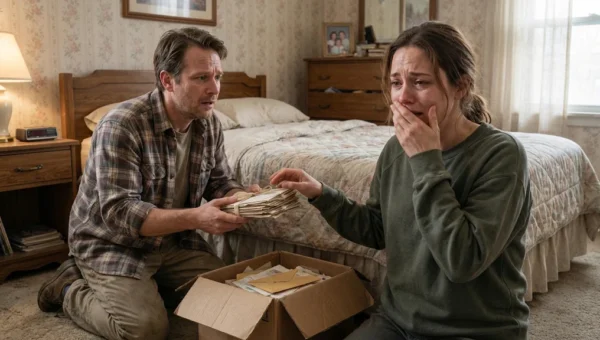
The bank alert came through while I had the wedding binder open on my dining table. It said the shared account was below $200. I had put $16,000 into that account for Ben’s wedding, so I read the message twice before I understood what it meant.
I’m Margaret. I’m sixty-three, and I’ve been a widow long enough to know that some days you can get through by doing the next plain thing.
That night, the next plain thing was to check the account. The thing after that was to look at the contracts.
I’d been trying to tell myself the wedding stress was temporary. Ben was my only child, and I wanted him to have a good day. I just didn’t know I was paying for a day that had been arranged as if my house, my name, and my money were all available whenever he needed them.
Arthur and I bought the house above the river before Ben was born. It isn’t grand. The back stairs complain under every step, and the conservatory’s brick floor stays cold until May. There’s a coat alcove by the front door where Arthur kept his brass house key. He carried that key for years, then hung it on the hook when he came in.
After Arthur died, I kept the house because it was the one thing grief hadn’t taken from us. I worked long shifts when Ben was young, patched what I couldn’t replace, and made every school concert I could.
I wanted Ben to have an easier start than I did. I didn’t set a limit on what “easier” meant.
Ben brought Sloane around a couple of years ago. She was polished, sure of herself, and very quick to notice what could be improved. She commented on the fading hallway paint before she asked about the family pictures. She said my armchair made the living room feel crowded and that the house needed a “cleaner line.”
I laughed at first. Ben seemed happy, and I wanted to be the kind of mother who welcomed the person he loved. I also didn’t want every visit to turn into a fight over furniture.
In February, Ben came over with his laptop and a budget sheet. Sloane had found a restored railway depot for the wedding. The total was $94,000. Her parents couldn’t contribute much, he said, and he asked if I could help.
I looked at the amount twice. I told him I could give $16,000. We opened a shared account for wedding expenses, and I transferred the money. Ben hugged me hard enough that his watch caught my sleeve.
“You’re saving us, Mom,” he said.
I believed him. Or maybe I wanted to.
After that, wedding plans followed me home. Sloane asked to use my spare room for decorations, then wanted the dining table cleared for invitations. She suggested moving my bookcase so the room would look better in pictures. When I pushed back, Ben said, “It’s temporary. It’s one wedding.”
I kept hearing that. One wedding. One favor. One afternoon. I let small things pass because I didn’t want to be the reason Ben felt caught between us.
One afternoon, Sloane stood in my kitchen looking at the cabinets like she’d been hired to fix them.
“The rehearsal dinner will feel more modern if we take down those little prints,” she said. “And maybe shift the table toward the window.”
“I’m not rearranging my house for a photograph.”
Her smile stayed put. Ben looked down at his phone. I remember the little tap his thumb made against the screen. I told myself he was tired.
The next week, Sloane asked to use the conservatory for a calligraphy demonstration. I had seed trays spread across the potting bench and said I’d rather keep the room clear. She said it would only take an hour. Ben told me I should be flexible.
I thought she meant another day.
On Saturday, I came back from the grocery store and heard voices behind the conservatory door. Sloane was inside with two friends. A portable paper cutter sat on my potting bench. Cardstock covered the surface where I start my spring seedlings, and the trays had been moved to the brick floor.
Sloane looked up as if I’d arrived on schedule.
“We’re just getting the place cards sorted,” she said.
“You didn’t ask if you could come today.”
“We had to work around everyone’s calendars,” one of her friends said.
I picked up a tray. A row of young basil plants had bent under the edge of a stack of cardstock. I don’t know why I remember the smell of damp soil on my fingers so clearly. I do.
Sloane turned a wide seating board toward the window. Arthur’s picture, the one I kept on the ledge, had caught behind it. She pulled the frame free and slid it into the coat alcove.
“This background needs to look forward,” she said. “Not backward.”
I took the picture out of the alcove and put it back on the ledge.
“That’s Arthur,” I said. “This is my home. Pack your things and go.”
One friend gathered the place cards. The other folded the paper cutter shut. Sloane’s face went still.
“You’re turning a simple favor into a whole thing.”
I watched them carry their supplies out. Then I stood there with Arthur’s picture in my hands while the seedlings sat scattered across the floor. I should have asked Ben why his fiancée thought she could come into my home without me. I should have said more. I was tired of making every sentence softer so he wouldn’t get upset.
Ben called not long after they left. He didn’t ask what had happened in the conservatory. He said Sloane felt humiliated and I needed to apologize.
“She was using my house without permission,” I said.
“She was trying to help with our wedding. You make everything difficult for her.”
I looked at Arthur’s picture. There was a small crease in one corner of the frame that I’d never gotten around to fixing.
“Ben, I’ve been trying to make room for both of you.”
“Then accept her decisions as part of my future. If you can’t, I don’t see why we should keep talking.”
I heard the call end. I stayed by the back stairs for a while, my phone still in my hand. The quiet didn’t feel peaceful. It felt like a door had been shut, though I hadn’t shut it.
That night I opened the wedding account. I expected to see payments to the depot and the caterer. Instead, I found charges for a spa, a clothing boutique, a hotel, and a monthly gym membership. I scrolled back through them, then went through them again, hoping I’d read something wrong.
I hadn’t.
The binder Ben had brought over weeks earlier was on the dining table. I opened it and checked each page. Depot agreements. Room rental. Catering addendum. Every contract had one signature.
Mine.
I remembered Ben bringing me a stack of papers and saying, “These are just booking confirmations. They need your name for the account.” I’d signed where he pointed. I had not read every line. That was on me. I had trusted him, and I’d been so busy being useful that I didn’t think to ask why the venue needed my signature.
At the top of the first page was the events office number. I called. The director, a woman named Paula, asked me to confirm my name and the date of the wedding.
“I need to know what I’m responsible for,” I said.
There was a pause while she looked up the file. Then she told me I was the sole contract holder and guarantor. The full $94,000 obligation was in my name. Ben and Sloane hadn’t qualified for the depot’s credit requirements, so the paperwork had been put under mine.
I sat down. I asked if I could cancel.
Paula said I could. The final penalty date hadn’t passed, and the deposit was refundable under the contract. She said she’d send the cancellation form and confirm the refund in writing.
I looked at the signatures again. Mine, neat and familiar, beside a commitment I hadn’t understood. I could almost hear Ben saying it was just a form. I asked Paula to cancel the wedding.
She didn’t try to talk me out of it. She sent the form while we were on the phone. I signed it, emailed it back, and waited until she confirmed the event was canceled.
Then I called the bank. The person on the phone explained the steps for closing a shared account. I went in Sunday morning with my identification and printed statements. The teller asked if I wanted to remove Ben or close the account.
“Close it,” I said.
I’d been too slow to ask questions before. I wasn’t going to be slow again.
The bank closed the account and gave me the final records. The money spent on personal things was plain on paper. Spa charges. Boutique purchases. A hotel stay. The gym membership. It wasn’t a misunderstanding about which vendor had been paid. It was money I had put aside for the wedding going somewhere else.
I didn’t call Ben from the bank. I didn’t call Sloane. I brought the papers home and laid them beside the cancellation receipt.
A locksmith came that morning. He was a quiet man with a tool bag and a small pad of receipts. I told him I needed the deadbolts changed. He asked if I wanted all the exterior locks done.
“Yes,” I said.
The old cylinder came out with a dry scrape. I watched the locksmith fit the new one. It took less time than I expected. When he tested the key, the lock turned cleanly.
After he left, I went into the conservatory. I set Arthur’s picture back on the ledge and straightened the bent basil seedlings as best I could. Some stood up. Some didn’t. I put the surviving trays back on the bench.
I thought of the brass key in the alcove. The hook was empty.
I’d noticed that before, but I had assumed I’d moved it. I checked the little dish beside the door, then the kitchen drawer where loose keys sometimes ended up. Nothing. I stood there with the empty hook in front of me and understood that someone had taken it.
Sunday afternoon, I heard a car on the gravel drive. Ben and Sloane came up the porch steps together. Ben had something in his hand.
I opened the door but kept one hand on the inside edge.
Ben held up Arthur’s brass key. “You changed the locks?”
“Yes.”
He pushed the key into the new lock. It went in partway, then stopped. He tried again, turning his wrist as if the lock were the problem.
“It doesn’t work,” he said.
“It’s a new deadbolt.”
Sloane stepped closer. “We need to get the wedding things from inside.”
“You can tell me what you need. I’ll bring it out.”
“We have every right to be here,” she said.
“No. You don’t.”
Ben looked at me like I’d changed the rules without warning. I had to bite back the first thing I wanted to say. I’d spent months making my no sound like an apology. I wasn’t doing it on the porch.
I held up the cancellation receipt. “The depot is canceled. I was the only person on the contract, so I canceled it.”
Sloane’s mouth opened, then closed. “You canceled our wedding?”
“I canceled the contract in my name.”
“That was our day,” Ben said.
“It was a $94,000 contract you put in my name because you couldn’t qualify for it.”
He looked down at the brass key. I held out the printed bank statements.
“And the wedding account is closed. I found the spa, the hotel, the boutique, and the gym charges.”
Sloane’s voice jumped. “Those were wedding expenses.”
“They weren’t paid to the depot or the caterer.”
“We had appointments,” she said. “I had to be ready.”
I kept the papers in my hand. “You spent money I gave you for the wedding on personal things.”
Ben leaned toward me. “Can you just transfer the rest back? We can figure out the venue.”
“There isn’t a rest. The account is closed.”
“You’re really going to do this over one bad afternoon?”
I stared at him. “This started before Saturday. You put a contract in my name without telling me what it was. You let Sloane use my house like a workroom. You took Arthur’s key. Then you told me not to expect you in my life unless I accepted her decisions.”
Ben rubbed his thumb over the brass key. “I didn’t mean it like that.”
“You said it.”
“I was angry.”
“So was I. I still read the papers.”
Sloane held out her hand toward the doorway. “We need the supplies.”
“I’ll bring them to the porch. You won’t come in.”
Her face tightened. “You’re ruining everything.”
“No,” I said. “I’m ending my part in it.”
Ben glanced past me toward the hall. I knew that look. He expected me to give way once the two of them were standing there together. He had counted on my love to make every boundary temporary.
He didn’t look cruel. He looked scared and embarrassed, and maybe he was. For years I’d made it easy for him to believe I would fix things if he waited long enough. That didn’t make what he’d done smaller.
I held out my hand. “Give me Arthur’s key.”
Ben looked at it, then at me. For a second I thought he might put it in his pocket. Instead, he set it in my palm.
The metal was warm from his hand.
I stepped back inside and shut the solid oak door. The brass key went back on its hook in the coat alcove. Through the conservatory glass, I could see my basil standing beside Arthur’s picture and the quiet river beyond it.