The notification on my phone came through while I was sitting in my Dodge Dart outside the post office, just staring at the steering wheel and trying to figure out how I was going to pay for groceries through the end of the month. It was an email from the probate lawyer handling Grandfather Miller’s estate. The final distribution had cleared.
My brother, Kyle, got the lake cabin up by Otter Tail, complete with the dock and the aluminum fishing boat. My sister, Brenda, got the ninety-thousand-dollar certificate of deposit from the credit union in town. And I got a wooden crate of old duck decoys that had been sitting in the corner of the detached garage behind the house on Elm Street for as long as I could remember.
Grandfather Miller had passed away quietly on a Tuesday morning in late October, just three days after his eighty-fourth birthday. He had lived alone in that small, drafty house ever since Grandma died back in two thousand and six, slowly turning into a fixture of the neighborhood. People in town knew him as a man who kept to himself, worked a garden, and spent hours out in his shed with a pocketknife and a block of white pine. He wasn’t a talker.
When you sat with him in his kitchen, you didn’t fill the silence unless you had something worth saying. Kyle and Brenda rarely bothered to visit, complaining that the old man was about as exciting as a wet shingle, but I used to go over there every Thursday after my shift at the clinic just to sit on the back porch and hand him sandpaper when he asked for it.
The reading of the will took place in a small conference room at the lawyer’s office downtown. Kyle wore his golf shoes, clicking across the linoleum like he owned the building, and Brenda had her phone out the whole time checking real estate listings for lake property. When the lawyer finished reading out the asset distribution, Kyle let out a sharp, barking laugh that made the receptionist look up from her desk.
“Twelve wooden ducks,” Kyle said, shaking his head and leaning back in his chair with a smirk. “What are you going to do with those, Lena?
Set up a pond in your apartment bathtub? They were his pets, I guess. At least you won’t have to pay property taxes on a crate of kindling.”
Brenda didn’t even look up from her screen, just patted my shoulder with one manicured hand as she walked past. “Don’t worry, honey. Maybe you can sell them at a garage sale for twenty bucks apiece. Buy yourself a nice pair of shoes.”
I didn’t say anything to them. I never did. Growing up, I was always the quiet one, the middle child who absorbed the tension in the room and kept her mouth shut to keep the peace. I just nodded, thanked Mr. Henderson the lawyer, and drove out to Grandfather’s house to collect my inheritance before the new owners took possession.
The crate was heavier than it looked, smelling of linseed oil, dry cedar, and thirty years of basement dust.
There were twelve birds packed inside, wrapped in old issues of the local newspaper from nineteen-eighty-four. Their paint was flaked off in pale, chalky scales, showing the graying wood underneath. Some of them had missing bills, chewed up by mice or dropped on concrete floors decades ago. I loaded them into the back of my Dart, wedged between a bag of road salt and an empty oil can, and drove them back to my rental house on the south side of town.
I set the crate on my back porch, meaning to clean them up or maybe give them away to a thrift store once I had a free weekend. But life doesn’t give you free weekends when you are working forty-five hours a week at a physical therapy clinic and trying to stretch a paycheck over gas, electricity, and car insurance that keeps creeping up every six months.
Three days after I brought the crate home, my car gave out. I was turning onto Route 6 on my way to work when the transmission gave a loud, metallic clunk, the engine whined like a trapped cat, and the Dart coasted to a dead stop right in front of an antique shop called Halloran’s Curiosities. Steam rolled out from under the hood, smelling of burning transmission fluid. I sat there for a minute with my head against the steering wheel, watching the semi-trucks roar past on the highway, feeling that familiar, heavy drop in my stomach that comes with knowing you are entirely out of options.
The repair estimate later that afternoon was seven hundred and forty dollars. The mechanic, a man named Gary with grease permanently ground into the creases of his knuckles, wiped his hands on a rag and looked at me with a kind of tired pity. “I can’t let this roll out of here without a rebuild, Lena. You’ll blow the whole block by Tuesday.”
I walked out of the garage with my purse strap digging into my shoulder. I had forty-two dollars in my checking account and payday was still nine days away. I walked back down Route 6, head down against the biting wind, until I reached the storefront where my car had died. The window of Halloran’s Curiosities was packed with old bottles, tarnished silver spoons, and yellowed postcards. It looked like the kind of place where things went to be forgotten.
I pushed the heavy wooden door open, setting off a brass bell that jangled overhead. The air inside hit me immediately, thick with the scent of old paper, pipe tobacco, and beeswax. An older man with white hair and round wire-rimmed glasses looked up from a ledger behind the counter. He didn’t smile, just watched me over the top of his lenses with a slow, appraising gaze that made me feel like an inventory item.
“Can I help you find something, ma’am, or are you just trying to thaw out?” he asked. His voice was raspy, like dry leaves scraping across concrete.
“I need to sell something,” I said, my voice sounding smaller than I meant it to. “I don’t know if it’s worth anything, but… my grandfather just passed away, and these were his.”
I reached into the canvas tote bag I had brought with me and pulled out the least damaged of the twelve decoys. It was a mallard drake, its wooden head turned slightly to the left, though most of the green paint on its neck had peeled away to expose the pale, fine-grained pine beneath. I set it gently on the glass counter, right next to a stack of old ledger books.
Mr. Halloran didn’t look at me. He reached out a long, liver-spotted hand, his fingers hesitating just above the carved wood before he picked it up. The moment his fingers brushed the surface of the decoy, he went completely still. The scratch of his pen stopped. The ticking of a grandfather clock in the corner seemed to grow louder.
He brought the bird closer to the goose-neck lamp on his counter, tilting it toward the light. Then, with a slow, deliberate motion, he turned the decoy over onto its back. He didn’t say anything for a long time, just stared at the flat, weighted bottom where the keel had been smoothed down by decades of handling.
My chest tightened. The silence in the shop felt heavy, pressing down on my ribs. My fingers curled into the fabric of my coat pockets.
He traced his thumb across a faint, overlapping set of initials burned into the wood near the tail weight. *J.M.* But they weren’t just scratched in with a pocketknife; they were branded with a hot iron, neat and precise, flanked by a tiny, jagged notch that looked like the profile of a river bluff.
Mr. Halloran looked up then, and the sharp, indifferent look in his eyes was gone, replaced by something that looked almost like disbelief. His voice dropped to a low, gravelly whisper.
“Ma’am, do you know who carved these?”
I blinked, swallowing hard against the dryness in my throat. “My grandpa. He… he just whittled them out in his shed. He sat out there for hours with a pocketknife and a block of wood.”
Mr. Halloran shook his head slowly, setting the decoy down on the glass with an extreme reverence, as if it were made of spun glass. He didn’t answer right away. He turned around, shuffled over to a tall wooden bookcase behind him, and pulled down a thick, heavy volume bound in faded blue buckram with gold lettering on the spine: *Master Folk Carvers of the Upper Mississippi, Nineteen-Twenty to Nineteen-Seventy.*
“Your grandfather’s name was Joseph Miller,” Halloran said, not looking at me as he flipped rapidly through the heavy pages, his fingers leaving a faint rustling sound in the quiet room. “He lived down on Elm Street. Had a garden he tended every morning. Kept to himself.”
“Yes,” I managed to say. “That was him.”
Halloran stopped turning pages. He laid the book flat on the counter and pointed a trembling finger at a black-and-white photograph printed on the glossy paper. The photo showed a young man in his twenties standing by a wooden skiff on a foggy riverbank, holding up a string of canvasbacks. But it wasn’t the man in the photo that made my breath catch; it was the birds in his hands. They had the exact same turned head, the same sweeping line of the back, and the unmistakable little notched initial burned into the base.
“They called him the River Smith,” Halloran said softly, looking up over his glasses at me. “Back in the fifties, before the plastic decoys took over and flooded the market, collectors from Chicago and Minneapolis would pay top dollar for a genuine Miller rig. He stopped carving commercially around nineteen-sixty-five. Just vanished from the registries. Everybody thought he burned his remaining stock or lost them in a flood. People have been looking for a complete, un-rigged set of his twelve mallards for thirty years.”
I stood there by the counter, my mind refusing to assemble the pieces. I thought of Kyle laughing in the lawyer’s office. I thought of Brenda checking real estate listings while the man who had raised us in that quiet house was reduced to a footnote in a probate document.
“Twelve birds,” Halloran murmured, his eyes fixed on the decoy resting between us. “If the rest of them are in the same condition… if they still have the original lead weights and the maker’s stamp on the bottom… a complete rig of twelve authenticated River Smith mallards would easily fetch upwards of seventy or eighty thousand dollars at a regional folk art auction in Chicago. Maybe more if the provenance checks out.”
My knees felt weak. I had to reach out and grab the edge of the wooden counter to steady myself. The transmission repair bill for seven hundred and forty dollars suddenly felt like a joke from another universe.
“He didn’t leave them to my brother or sister,” I whispered, mostly to myself.
Halloran looked at me, a faint, knowing smile touching the corners of his mouth. “Mr. Miller wasn’t a fool, Miss Miller. If he gave them to you, he knew damn well you were the only one who wouldn’t throw them in a dumpster or sell them to a pawn shop for gas money.”
I left the shop an hour later with a check for two thousand five hundred dollars as a cash advance against the single mallard, which Halloran insisted on keeping in his display case under lock and key. He also gave me a list of contacts, auctioneers in Minneapolis, historical society archivists, and a preservationist who specialized in mid-century folk art.
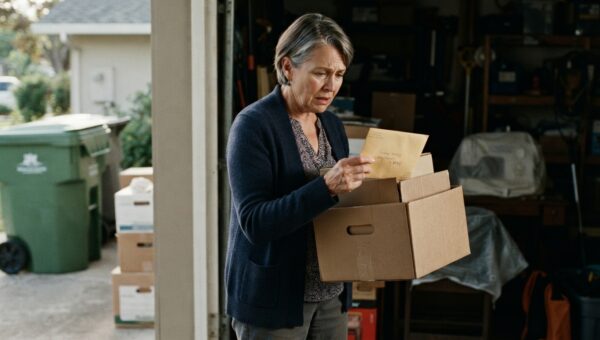
When I drove back to my rental house, the old wooden crate sitting on the back porch looked entirely different. It wasn’t a box of junk anymore. It was a vault. I carried it inside, set it carefully on my kitchen table, and spent the rest of the evening unwrapping each bird from the yellowed newspaper.
One by one, I lifted them out. There were mallards, canvasbacks, and a pair of teal. Underneath the bottom layer, tucked beneath a false wooden floor inside the crate, I found something else. It was a small, leather-bound journal with cracked seams. I opened it under the kitchen light. The first page was filled with Grandfather’s neat, sloping handwriting, dated October twain-ty-third, nineteen-fifty-two. It wasn’t just a journal; it was a record of every bird he had ever carved, every river he had hunted, and a small, handwritten note tucked into the back pocket addressed simply: *To Lena. You stayed.*
Three days later, my phone started ringing. It was Kyle first, his voice tight and frantic through the speaker.
“Lena, what the hell is this I’m hearing from Henderson’s office?” Kyle demanded, skipping any kind of greeting. “Some antique dealer from Route 6 called Brenda asking about Grandfather’s old duck decoys. He said something about a museum valuation. Those were part of the estate division! We split everything equal according to the inventory!”
“You called them a crate of kindling, Kyle,” I said, my voice steady in a way that surprised even me.
“That doesn’t matter!” he shouted, his voice cracking with panic. “The estate was closed under the assumption that the personal property was of negligible value! Brenda and I have a right to our third of whatever those things are worth. We’re coming over.”
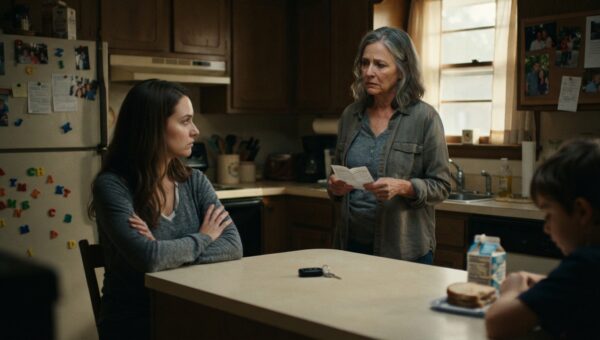
They showed up twenty minutes later, both of them bursting through my front door without knocking. Brenda looked like she was about to cry, her face flushed red under her makeup, while Kyle slammed the front door behind him so hard the picture frame on the wall rattled.
“You’re committing fraud, Lena,” Kyle said, marching right up to my kitchen table where the remaining eleven decoys were laid out on a clean white linen cloth. He reached out a hand as if to grab one.
I stepped into his path, my hand coming down flat on the edge of the table. I didn’t flinch.
“Read the will, Kyle,” I said, my voice dropping into that quiet, heavy register Grandfather used to use when he wanted absolute silence in the room. “Item four. ‘All personal working tools, wooden carvings, and workshop materials located within the property at Elm Street shall pass solely and exclusively to my granddaughter, Elena Miller.’ It’s right there in black and white. Henderson made sure of it.”
Kyle stopped dead, his hand hovering inches from a cedar-block canvasback. He looked at Brenda, then back at me, his mouth opening and closing like a fish out of water. “That… that was just supposed to be the scrap wood and the junk!”
“You didn’t ask,” I said. “You just wanted the cabin and the cash.”
Brenda crossed her arms, her voice trembling with a mixture of fury and disbelief. “You can’t just keep eighty thousand dollars’ worth of art, Lena! That’s family property! Dad would have, “
“Dad died twenty years ago, Brenda, and Grandfather spent the last ten years sitting in that house alone while the two of you drove out twice a year to check if he was still breathing so you could get your names on the deed,” I said, and the plain, ugly truth of it hung in the kitchen air like woodsmoke.
Neither of them had an answer for that. They stood by my kitchen table for a long, silent minute, looking at the carved birds, looking at the receipts from Halloran’s shop, and finally realizing that no amount of shouting or legal posturing was going to undo what Grandfather had written with his own hand before his eyes got too weak to hold the knife.
Kyle turned around without another word, shoved his hands into his pockets, and walked out the front door, letting it bang shut behind him. Brenda lingered for a second, her eyes filling with bitter tears, before she turned and followed him down the walkway to their SUV.
The house grew quiet again. The kind of quiet that feels like room to breathe.
Two weeks later, the transaction with the historical registry was finalized. The collection went to a recognized folk art museum in Minneapolis, where they would be cataloged and preserved under the name they deserved. The financial payout was more than enough to clear every debt I had, pay off my car, and put down a secure foundation for the future. But the money wasn’t the part that stayed with me.
That afternoon, after the boxes were packed and shipped off, I kept just one. The lead mallard, the one with the flaked green paint and the notched *J.M.* burned into the base.
I carried it into the living room, brushed a speck of dust off the mantelpiece, and set it carefully on the polished wood. I stood back for a moment, watching the late afternoon sun catch the edge of the carved wing, and traced the faint, familiar outline of those burned initials with the tip of my finger.