The linoleum under my boots at the diner always had that faint, permanent coffee-stain crescent near station three, but tonight the floor was the mahogany in my mother’s dining room.
My mother Helen always had real silver laid out for her birthdays, polished until it threw cold glints against the wall. My sister Claire sat near the head of the table, her napkin spread across her lap like a judicial robe, talking about her third promotion at the county health board.
Brenda sat two seats down from her, quiet the way she had learned to be thirty years ago, her hands folded in her lap over the blue-checkered dish towel she always carried from home.
Brenda has waited tables at the same diner in Youngstown for twenty-nine years. Double shifts, aching feet, holidays on her feet pouring coffee, all so our kids could have more than she ever had. She has brought food to every sick relative and worked every family event from behind the counter, and never asked for so much as a thank-you.
My family all have their degrees, and they treat Brenda like the girl who serves the coffee and happened to marry in. The little digs about just waitressing. Claire explaining hard work to a woman who has been on her feet since she was sixteen. And whenever it got unkind, Brenda had her out up from the table, apron on, off to the kitchen to help until the moment passed.
Twenty-nyine years of finding a reason to leave my own family’s dinners. I sat across the table watching the way Claire leaned forward to make her point about local government administration. Helen nodded along, her tea cup hovering an inch above the saucer. They both liked the shape of their own voices in that room.
Claire cut another slice of roast beef and looked right past me toward Brenda. “Well, I suppose some people just don’t have the stomach for real competition,” Claire said, smoothing her linen napkin. “It’s different when you’ve actually had to test yourself in an office, instead of just memorizing where people like their eggs.”
Helen gave a soft, dry little chuckle that sounded like paper rustling in a drawer. “It’s honest work, Claire. Somebody has to do it.”
Brenda moved her hands. That was the only warning.
She reached for the dish towel she always brought along to dry the heavy platters Helen refused to trust to the dishwasher.
At my mother’s birthday, my sister started in on her again, and Brenda rose and reached for the dish towel.
Then she folded it. She laid it down flat on the mahogany table right beside her water glass.
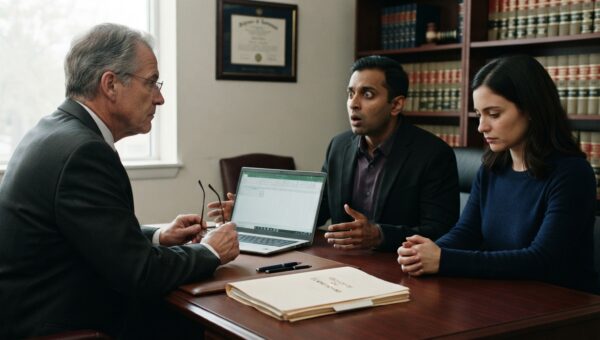
She didn’t disappear into the kitchen the way she always did. She sat back down at the table, turned to face my sister, and kept her eyes right there on Claire’s face.
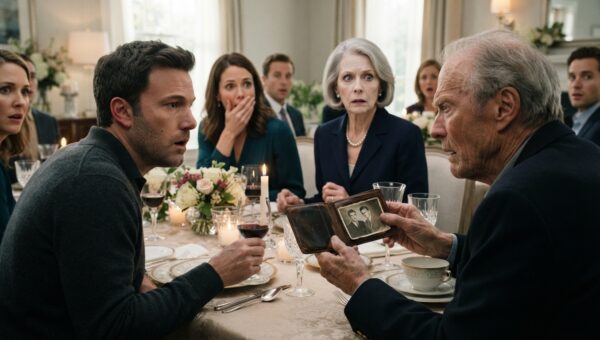
The room went entirely dead. Even the antique clock on the mantel seemed to stop its ticking.
Claire blinked once, her fork hovering halfway to her mouth. “Brenda? The gravy bowl is empty, dear. Go on back.”
Brenda didn’t move an inch. Her voice didn’t shake when she spoke, but it had that flat, heavy drop to it that I hadn’t heard since the night our oldest son totaled his first car and she told him to sit down and look her in the eye.
“I’m not going to the kitchen, Claire,” Brenda said. Her hands rested palms-down on the table, the skin across her knuckles pink and dry from thirty years of hot water and industrial sanitizer. “I’m sitting right here.”
Helen set her saucer down hard enough to make the china ring. “Now see here, Brenda. We are trying to have a pleasant family evening. There is no need for that tone.”
“Twenty-nine years, Helen,” Brenda said, and she used her name, not Mother, the way she had stopped doing around the time Claire bought her first house. “Twenty-nine years I’ve carried my apron through that door so you didn’t have to look at the waitress who married your son while you ate your pot roast.”
Claire dropped her fork. It hit the silver plate with a sharp, ugly clatter. “Are you actually sitting here making a scene on Mother’s birthday? Because you feel insecure about your job?”
I looked at Claire. Really looked at her. Her hair was sprayed into a hard, perfect helmet that never moved, and she had never missed a mortgage payment in her life because my father left her half his portfolio.
“She’s not insecure, Claire,” I heard myself say. My voice sounded thin in my own ears, like a stranger talking from the next room.
Claire turned her sharp little eyes on me, the same look she used on junior clerks when they filed the wrong forms. “Stay out of this, Arthur. She’s being dramatic.”
“No, she isn’t,” I said, and my spine felt like it had just been bolted to a steel beam for the first time in three decades. I stood up so fast my chair legs screeched against the hardwood floor. “She’s been sitting here taking your insults since before our daughter was in grammar school.”
Helen pressed a hand to her chest, the very picture of wounded maternal dignity. “Arthur, how can you speak to your sister that way in my house? After everything we’ve done?”
“What have you done, Helen?” Brenda’s voice cut through the room like a cold knife. She didn’t raise it above a normal speaking level, but every word carried the weight of four thousand double shifts. “When Claire’s husband walked out and she needed twenty grand to settle his debts, who do you think paid for her legal fees? It wasn’t your pension. It was the night shifts at the diner. Every Christmas turkey on this table for ten years was bought with tips from men who call me honey.”
Claire’s face went mottled, red climbing up from her silk collar. “You work in a diner. Don’t sit there and pretend you’re some kind of philanthropist.”
“I’m not pretending anything,” Brenda said, standing up slowly. She left the dish towel lying right in the center of the mahogany table, square and neat like a small white flag of surrender to an army that had finally lost its right to fight. “I’m just tired of pretending you’re better than the people who keep your town running.”
Helen stood up too, trembling slightly, pointing a shaking finger toward the front door. “If you talk to my daughter like that in this house, you can take your things and leave right now.”
I didn’t wait for Brenda to answer. I walked around the table, picked up her coat from the back of the chair, and laid it across her shoulders the way I used to when we walked out into the winter sleet after closing up the restaurant late on Sunday nights.
“We’re already gone, Mother,” I said.
We walked down the hallway together past the framed graduation photos of Claire’s kids, pictures paid for by inheritances and trusts while our kids worked the line at the local supply warehouse during summer breaks to pay for their own books. Nobody followed us to the door. Claire was already talking over Helen’s shoulder about disrespect and ungrateful people, her voice rising in the back of the house like wind through a broken shutter.
When we got outside, the night air was cold and smelled of wet oak leaves and woodsmoke from the neighbor’s chimney.
The gravel in our driveway crunched under our tires as we backed out, a heavy, dry sound that had followed us through every family holiday we had ever tried to force ourselves through. I looked over at Brenda as we hit the empty county road.
She wasn’t crying. She was just looking straight ahead through the windshield, her hands resting peacefully in her lap, empty of any towel, empty of any apron, empty of everything she had carried for twenty-nine years.