The cedar floorboards of our back porch always creaked in a very particular three-step rhythm under my boots, but that morning in late August, the sound just made my stomach tighten into a knot. We had just moved down from Alexandria to this little shrimping parish outside Houma, hauling our boxes into a rental house that still smelled faintly of salt water and old pine.
Chloe was sitting at the laminate kitchen table, her small bare feet swinging a few inches above the floor, clutching her favorite box of Crayola crayons. It was supposed to be a fresh start. A quiet house with a yard where she could finally run without me hovering over her shoulder with a plastic timer.
She was eight years old then, but she had been carrying a label around since she was four like a heavy wool coat in July. Twice daily. Tegretol. Fifty milligrams morning and night. Every three months like clockwork, we drove to the clinic for blood draws, watching the nurse find that same tiny vein in her arm while Chloe stared at the ceiling and tried not to cry. Four years of morning drowsiness. Four years of a dull, angry rash across her cheeks that no lotion ever quite touched. I always blamed the Louisiana humidity or sensitive skin, never once looking at the little amber bottle sitting right beside the sugar bowl.
The moving boxes were still stacked against the hallway wall when I took her to see Dr. Okafor for her new patient intake. The clinic was small, clean, and smelled faintly of lavender floor wax instead of the cold, sour disinfectant of the old children’s center up north. Dr. Okafor was a tall woman with silver threads in her hair and glasses pushed up high on her nose, the kind of doctor who didn’t look at a computer screen while you talked. She had Chloe’s thick paper file spread out across the examination table, forty-seven pages of hospital transfers, lab printouts, and referral notes that I had carried from office to office like sacred scripture.
Dr. Okafor turned page thirty-two, ran a finger down a column of dates, and stopped. She didn’t look up right away. She just stared at the page, her thumb tapping once against the laminate counter.
“Who ordered the original EEG?” Dr. Okafor asked. Her voice was quiet, almost conversational, but the room suddenly felt very small.
“Children’s Medical Center,” I said, shifting my purse on my shoulder. “Dr. Linden. Back when we lived near the city.”
“There’s no EEG in this file,” she said, finally looking over her glasses at me.
“He said she had one,” I told her, and my throat felt dry all of a sudden. “Right after her first febrile episode when she was four. He told me the tracing showed clear epileptiform discharges.”
“There’s no record,” she repeated, and she tapped the folder twice. “The diagnosis is based on a single office visit four years ago. No EEG. No MRI. No second opinion in the chart. Just an intake note and a lifetime prescription.”
I just stood there because my brain kind of stopped working for a second. “That can’t be right.
We’ve been refilling it every month. We go every ninety days for blood work.”
“I’m ordering both today,” Dr. Okafor said softly, her pen already moving across a prescription pad. “An EEG and an MRI. Same week. Let’s see what we’re actually working with.”
Driving home from that clinic, the air conditioning in my old sedan rattled against the dashboard, but I couldn’t hear it over the sound of my own heart in my ears. Chloe was humming in the back seat, coloring inside the lines of a horse with a blue crayon, totally unaware that the ground beneath us had just shifted. Four years of pills. Four years of waking her up early, watching her rub the sleep from her eyes while I measured out the orange-flavored syrup before she even had breakfast. I kept telling myself she was just a naturally quiet kid, a little more fragile than the others.
The diagnostic center on the edge of town was cold, smelling of stale coffee and industrial carpet. Chloe was braver than I was. She lay back on the sliding table while the technician fitted the white mesh cap full of electrodes over her dark hair, looking like a little astronaut getting ready for launch. I held her hand through the whole forty minutes of flashing strobe lights and steady humming, my thumb rubbing the back of her small knuckles while she kept her eyes squeezed shut just like they asked.
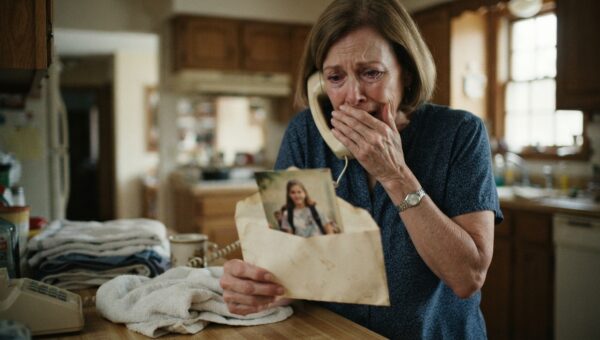
Two days later, Dr. Okafor’s office called before I even had the breakfast dishes washed.
“The EEG is completely normal,” Dr. Okafor said over the line, and her tone had none of the professional detachment from our first meeting. It had a hard, sharp edge now. “No seizure activity. None. And the MRI results just came through from the imaging center. Pristine. Your daughter has never had epilepsy.”
The phone felt heavy and slick in my palm. “Never?”
“Never,” she said. “And I want you to bring her in tomorrow morning. We need to talk about Dr. Linden.”
The rest of that day passed in a blur of gray light. I walked into Chloe’s room while she was building a tower out of wooden blocks and I just watched her hands move, steady and quick, stacking yellow and red cubes. I didn’t cry. I didn’t know how to cry. I just felt this cold, steady fury settling deep down in my chest, heavy as lead. Every morning I had given her a poison she never needed, and every morning she had taken it because she trusted me to keep her safe.
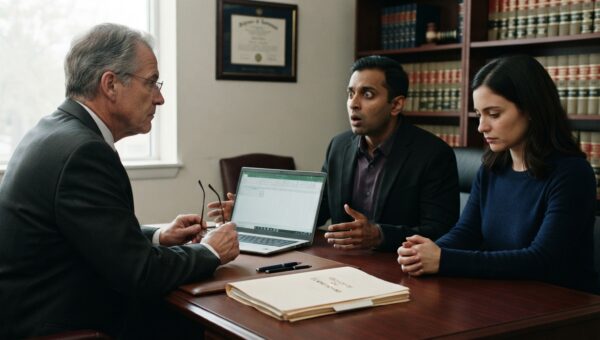
When we sat across from Dr. Okafor’s desk the next morning, she had a stack of printed state board documents sitting beside Chloe’s medical file. Chloe was out in the waiting room with a nurse, coloring a picture of a dolphin.
“I tried calling Dr. Linden’s office after we spoke,” I said before Dr. Okafor could even open her mouth. “The number is disconnected.”
“It is,” Dr. Okafor said, sliding a single sheet of paper across the desk toward me. “His license was revoked by the state medical board earlier this year. In 2024. An independent audit caught him.”
I looked down at the paper. The print was small and dense, full of legal terms and state registry numbers. “An audit?”
“十四 patients in that clinic alone,” Dr. Okafor said, her voice dropping lower. “All diagnosed with mild seizure disorders on the first visit. All prescribed high-dose carbamazepine. He had a formal financial kickback arrangement with a compounding pharmacy three blocks from his office. Every refill generated a quarterly bonus for his practice.”
“Four years,” I whispered. The words felt like broken glass in my mouth. “She took that stuff for four years.”
“The pediatric neurologist I consulted this morning reviewed her baseline labs,” Dr. Okafor said, leaning forward and resting her forearms on the desk. “The unnecessary Tegretol has caused mild liver enzyme elevation and some suppression of her natural growth velocity. Nothing we can’t reverse with a careful, supervised step-down taper, but she shouldn’t have spent a single day of her life on that medication.”
She didn’t offer any comforting clichés. She didn’t tell me everything happens for a reason or that we should just be thankful we caught it now. She just sat there with me in the quiet office while the ceiling fan turned in slow, heavy circles, letting the ugly truth sit between us on the mahogany wood.
That evening, the kitchen was quiet except for the hum of the refrigerator. I stood by the counter with the orange plastic pill bottle in my hand, the label curling slightly at the corner where the pharmacy tech had pressed it down four weeks ago. Chloe was sitting at the table with her crayons again, her cheeks still carrying that faint, stubborn redness that I now knew wasn’t the weather at all.
“Mom, can I have my juice?” she asked, looking up with those wide, clear eyes.
“In a minute, honey,” I said.
I unscrewed the white cap and tipped the remaining tablets into the trash can, watching them disappear beneath a crumpled paper towel. Then I took the empty bottle and dropped it right into the recycling bin under the sink, listening to the plastic hit the bottom with a hollow, final thud.
Dr. Okafor gave us a strict schedule for weaning her off the drug, dropping the dose by ten milligrams every week so her little system wouldn’t rebel. For the first fourteen days, I watched her like a hawk, ready for any twitch or shiver, but nothing happened. She just slept a little deeper at night and woke up without that heavy, foggy haze behind her eyes.
By the end of the second month, the persistent rash on her face had faded away entirely, leaving her skin clear and smooth just like it should have been all along. The lab work came back three weeks later with her liver numbers right back where they belonged, holding steady in the middle of the normal range.
We didn’t get a grand courtroom showdown with Dr. Linden. He had already vanished behind closed bankruptcy filings and surrendered credentials before the state investigators even finished boxing up his files. But Dr. Okafor’s packet went straight into the active state health registry investigation, adding our four years of pharmacy receipts to the pile that finally shut down every remaining piece of his old network.
The morning of our first completely pill-free routine, the sun came through the kitchen window and hit the white tile backsplash like a clean slate. The counter was entirely cleared of amber bottles, replaced instead by a tall stack of warm blueberry pancakes and Chloe’s open coloring books scattered across the wood. She was laughing at something on television, her feet kicking the legs of her chair with a burst of restless energy that used to leave her exhausted by noon. I stood by the sink with a cup of black coffee, watching the steam rise into the cool morning air, feeling the last of that heavy shadow finally lift off our floorboards.