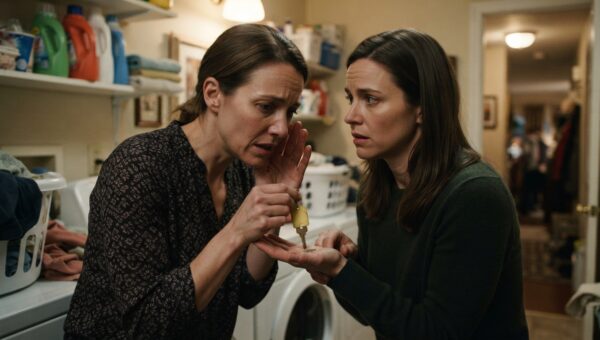
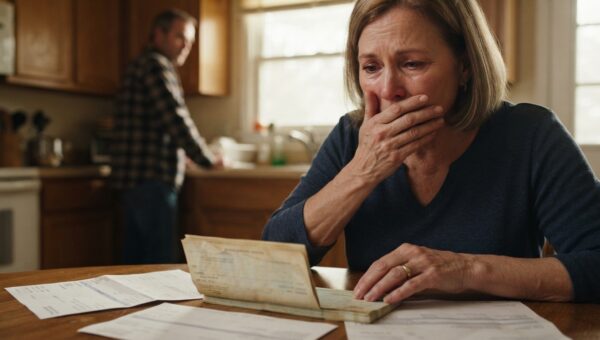
The green ledger sat right in the middle of the kitchen table, underneath a stack of unopened junk mail and a yellow sponge that had seen better days. It was a cheap notebook with cardboard covers, but the ink inside had outlasted two people and forty years of quiet bitterness.
My grandfather, who spent his whole life walking the damp floorboards of the county feed store, didn’t write much in it.
He just kept track of numbers. He wrote down what my father borrowed for his various business ventures that never quite made it past the parking lot stage. He wrote down every time my mother dipped into the college fund to pay for curtains or a new sedan. By the time he passed away, the math in that book didn’t look like a family tree anymore. It looked like an audit.
When he and my grandmother left me their entire estate after graduation, it wasn’t because I was the favorite grandchild. It was because I was the only one who didn’t look at them like a walking ATM.
The portfolio came out to roughly $1.2 million in liquid assets, plus the old homestead sitting on two acres of fenced pasture just outside town. My parents lived in the guest cottage out back, a arrangement that was supposed to keep them comfortable in their retirement.
Instead, it made them feel like landlords of a property they didn’t own.
I knew how my family operated. The second the will was read, my sister Ashley started picking out which bedroom in the main house would become her walk-in closet. She was twenty-four, perpetually unemployed, and possessed an astonishing talent for spending money she hadn’t earned yet. My parents encouraged it, whispering about how families share everything and how blood outweighs legal titles.
I didn’t argue with them. I didn’t scream or wave papers in their faces. I simply took the paperwork straight to Arthur Vance, the estate attorney who had drafted my grandparents’ wills back when Nixon was in office.
“They’re going to try something the second the probate window closes,” I told Arthur across his mahogany desk, which smelled faintly of old leather and pipe tobacco.
Arthur adjusted his wire-rimmed glasses, tapped a fountain pen against a stack of crisp cream-colored bond paper, and gave me a dry, knowing look. “Let them try.
We built this trust to be airtight, not just watertight. Hand over the deeds, and let the law do its quiet work.”
We transferred every square inch of the real estate and every cent of the portfolio into an irrevocable asset-protection trust before the ink on the death certificates was fully dry. My name was on the trust charter as the sole administrative trustee. My parents had no more legal claim to the main house than the mail carrier who dropped off the circulars every Tuesday.
For three years, I lived in the main house, maintaining the cedar siding, patching the roof shingles before the winter rains hit, and working my remote job from the small desk in the sunroom. My parents stayed in the cottage, occasionally dropping by to complain about the plumbing or hint that I should pay for Ashley’s latest wedding registry item. I gave them polite nods, kept the pantry stocked, and said nothing about the trust.
Then came last Tuesday afternoon.
The screen door banged against the jamb harder than usual. My mother, Eleanor, marched into the kitchen with her chin tilted up like she was walking the aisle at a charity gala. Robert, my father, followed right behind her, smelling faintly of stale menthols and cheap aftershave. Ashley brought up the rear, scrolling on her phone with wireless earbuds dangling around her collarbones.
“We need to talk about the layout,” Eleanor announced without even taking off her cardigan. She dropped a heavy designer handbag onto the wooden dining table right on top of my laptop sleeve.
I didn’t look up from my keyboard right away. I finished typing out the sentence in my spreadsheet, hit save, and slowly turned around in my chair. “Hello to you too, Mom. What layout?”
Robert cleared his throat, puffing out his chest the way he always did when he was trying to look like a man of consequence. “We’ve decided it’s time to streamline things around here. Ashley is getting serious with her new boyfriend, and they need a proper place to start their life. This house has too much empty space for just one person anyway.”
I kept my voice entirely flat, almost bored. “Is that right?”
Ashley finally looked up from her phone, her eyes bright with that familiar, predatory glee that always showed up whenever she thought she was getting something for free. “We’ve put the house in Ashley’s name,” she blurted out, stepping forward and crossing her arms. “You need to be out by Friday.”
The silence in the kitchen wasn’t deafening. It was just heavy, like wet soil before a thunderstorm. I looked at the three of them standing there in my kitchen, completely convinced that their word was the same as a gavel from a judge. They had spent forty years believing that if they just said something loudly enough, reality would rearrange itself to fit their desires.
I didn’t yell. I didn’t point fingers or ask them what legal fantasy land they had been visiting down at the county courthouse. I just looked straight at Ashley, then at my parents, and gave them the only answer that mattered.
“We’ll see about that.”
Robert let out a sharp, dismissive bark of laughter. “Don’t give me that attitude. We signed the papers down at the Title Bureau yesterday morning. The deed has Ashley’s signature right on the dotted line. You’re a guest here, always have been. Friday morning at eight o’clock, the movers are showing up, and you’re going to be packed.”
They stayed for another ten minutes, barking orders about which furniture I was allowed to take and which pieces belonged to the family estate, before strutting back out to the cottage like conquering heroes. They didn’t notice the faint hum of my phone vibrating on the counter as I dialed Arthur Vance’s direct line.
“Arthur,” I said quietly when he picked up on the second ring. “They filed something down at the county. A quitclaim deed.”
A low chuckle came through the receiver. “I was wondering when they’d try that trick. Bring your coffee down to my office in twenty minutes. Let’s go see what kind of mess they made of the public record.”
The next two days passed in a blur of certified copies, embossed seals, and legal grease. Arthur pulled the exact document my parents had filed. It was a crude, handwritten quitclaim form downloaded from some generic legal website, filled out with my father’s shaky cursive, attempting to transfer the main house directly to Ashley using an outdated pre-probate parcel map from 1994. It had zero legal standing. It wasn’t just void; it was an active piece of fraud signed under penalty of perjury.
Arthur didn’t even blink. He drafted three separate injunctions, a formal notice of unlawful trespass, and a criminal fraud warning letter addressed directly to Robert, Eleanor, and Ashley. He attached the original probated will, the irrevocable trust charter bearing my grandparents’ notarized signatures, and the county recorder’s official title certification showing 100% of the property vested in the trust.
“We’ll let them bring their movers,” Arthur said, sliding the heavy papers into a thick manila folder and snapping it shut. “Some lessons can’t be taught with a conversation. They need a front-row seat.”
Friday morning arrived crisp and bright, the kind of clear October day where the shadows cut sharp across the gravel drive. At exactly 7:55 AM, a large blue moving van rumbled down the lane, its diesel engine rattling the windowpanes in the front parlor.
I was sitting in the wooden rocking chair on the front porch, a cup of black coffee steaming in my hands. I didn’t look angry. I didn’t look stressed. I just watched as Robert’s sedan pulled in right behind the moving truck, followed by Eleanor’s SUV and Ashley’s white convertible.
The car doors slammed shut in unison. My parents and Ashley stepped out looking like they were walking the red carpet at an awards show. Ashley was wearing brand-new sunglasses, her hair blown out to perfection, holding a travel mug of latte like she was already inspecting her new domain.
“Morning, tenant,” Robert called out loudly, walking ahead of the movers with a swagger that didn’t match his worn-out loafers. “Hope you got your boxes taped up. The crew is on the clock, and we don’t intend to pay for idling time.”
Ashley skipped up the first two wooden steps of the porch, her hand outstretched to push open the front door. “I’m taking the master bedroom with the bay windows, by the way. Don’t leave any of your cheap knick-knacks in the drawers.”
They were so confident they didn’t even notice the second chair on the porch wasn’t empty.
Arthur Vance sat quietly in the corner wicker chair, dressed in his charcoal three-piece suit, resting his hands neatly over the top of a thick, heavy manila folder. He didn’t move until Ashley reached for the brass doorknob.
“I wouldn’t touch that knob, young lady,” Arthur said, his voice cut through the morning air with the quiet, devastating authority of a judge in session.
Ashley froze mid-reach, her hand hovering an inch from the brass. She blinked, looking down at Arthur, then over at my parents as they marched up the steps.
Robert’s face flushed a mottled, angry red. “Who the hell are you? What are you doing on private property? Get off this porch right now before I call the sheriff.”
Arthur didn’t stand up. He slowly unlatched the brass clasp of the folder, pulled out a pristine, heavy-stock document with a gold foil seal, and laid it flat across his knees. He looked up at my father over his wire-rimmed glasses.
“Robert, Eleanor, Ashley. My name is Arthur Vance. I’ve been the legal counsel for the estate of Thomas and Martha Miller for forty-two years. And as of right now, you are standing on property owned exclusively by an irrevocable trust that you have no legal relationship with whatsoever.”
Ashley dropped her latte mug. It hit the wooden porch boards with a dull, wet thud, brown liquid splashing against her white sneakers. “What are you talking about? Dad said the house belongs to me now. We have the papers.”
“You have a piece of toilet paper printed off the internet and filled out with a federal felony,” Arthur replied smoothly, his voice never rising above a conversational tone. He turned the first page toward them. “This is a certified copy of the county land registry. And this is the original trust charter drafted when your parents passed away, explicitly barring Robert and Eleanor from any ownership interest in this parcel. The document you filed at the courthouse yesterday morning is not a deed. It is an act of attempted title fraud.”
The moving crew foreman, a thick-set man in a high-visibility vest holding a clipboard, had walked up behind Robert during the exchange. He looked from Arthur’s formal paperwork to my parents’ rapidly draining faces.
“Hold on a minute,” the foreman said, his voice dropping into gravelly suspicion. “Is this a disputed property?”
“It is not disputed,” Arthur said calmly, handing the foreman a single laminated notice. “It is fully owned by my client. If you cross this threshold or touch a single box in this house, you are participating in a felony trespass and grand theft operation. My advice is to get back in your truck and send the bill for your transit time to the people who hired you under false pretenses.”
The foreman took one look at the gold seal, looked at Robert, and immediately turned on his heel. “We’re done here. Jimmy, get the ramp up. We don’t touch fraudulent jobs.”
The air went completely out of the front yard. The heavy diesel engine of the moving van roared back to life, spitting a cloud of grey exhaust into the gravel as the driver threw it into reverse and backed out of the drive without another word.
Ashley stared at the empty driveway, her mouth opening and closing like a fish out of water. “Dad? Tell him he’s lying. Tell him you own the house. You said it was ours.”
Robert didn’t answer her. He was staring at Arthur’s folder as if it were a venomous snake coiled on the porch floorboards. His hands were shaking slightly, stuffed deep into his windbreaker pockets.
Eleanor let out a sharp, hysterical gasp, turning her fury onto me. “You did this. You sat there in that kitchen eating our food, acting like a good little child while you stabbed us in the back all along! We raised you! We gave you a roof over your head!”
“You lived in the guest cottage my grandparents paid for,” I said quietly, my voice steady, finally standing up from my rocking chair. “And the only reason you had electricity and groceries for the last three years is because I didn’t cut off the secondary stipend the trust allotted you out of mercy.”
Arthur stood up beside me, buttoning his suit jacket and tucking the folder under his arm. He looked down at my parents with a cold, professional pity.
“Consider this your thirty-day formal notice to vacate the guest cottage out back,” Arthur said, his voice ringing across the yard. “Any attempt to file further fraudulent documents will be met with immediate criminal prosecution by the district attorney’s office. You are barred from entering the main house ever again.”
He turned and walked down the steps toward his car, leaving the three of them standing alone on the porch in the morning sun.
Robert muttered something low and broken under his breath, turning away and heading back toward the sedan without looking at Ashley once. Eleanor glared at me one last time, her face twisted in pure, impotent rage, before chasing after my father like a scolded dog.
Ashley lingered for a second longer, tears of pure humiliation finally spilling over her mascara-stained eyelashes, looking around the empty porch as if she still expected someone to tell her it was all a joke. When she realized no one was coming to save her fantasy, she turned and bolted down the stairs, jumping into her convertible and peeling out of the gravel drive with tires screaming.
The dust slowly settled over the driveway. The heavy diesel smell of the moving van faded into the crisp autumn air.
I walked back inside, shut the heavy front door, and locked the brass deadbolt with a single, firm turn of the key. The house was quiet again. Not the quiet of an empty room, but the deep, unshakable silence of a boundary that would never be crossed again. I walked over to the kitchen table, picked up the green ledger, and slid it into the bottom drawer of the desk, closing it for good.